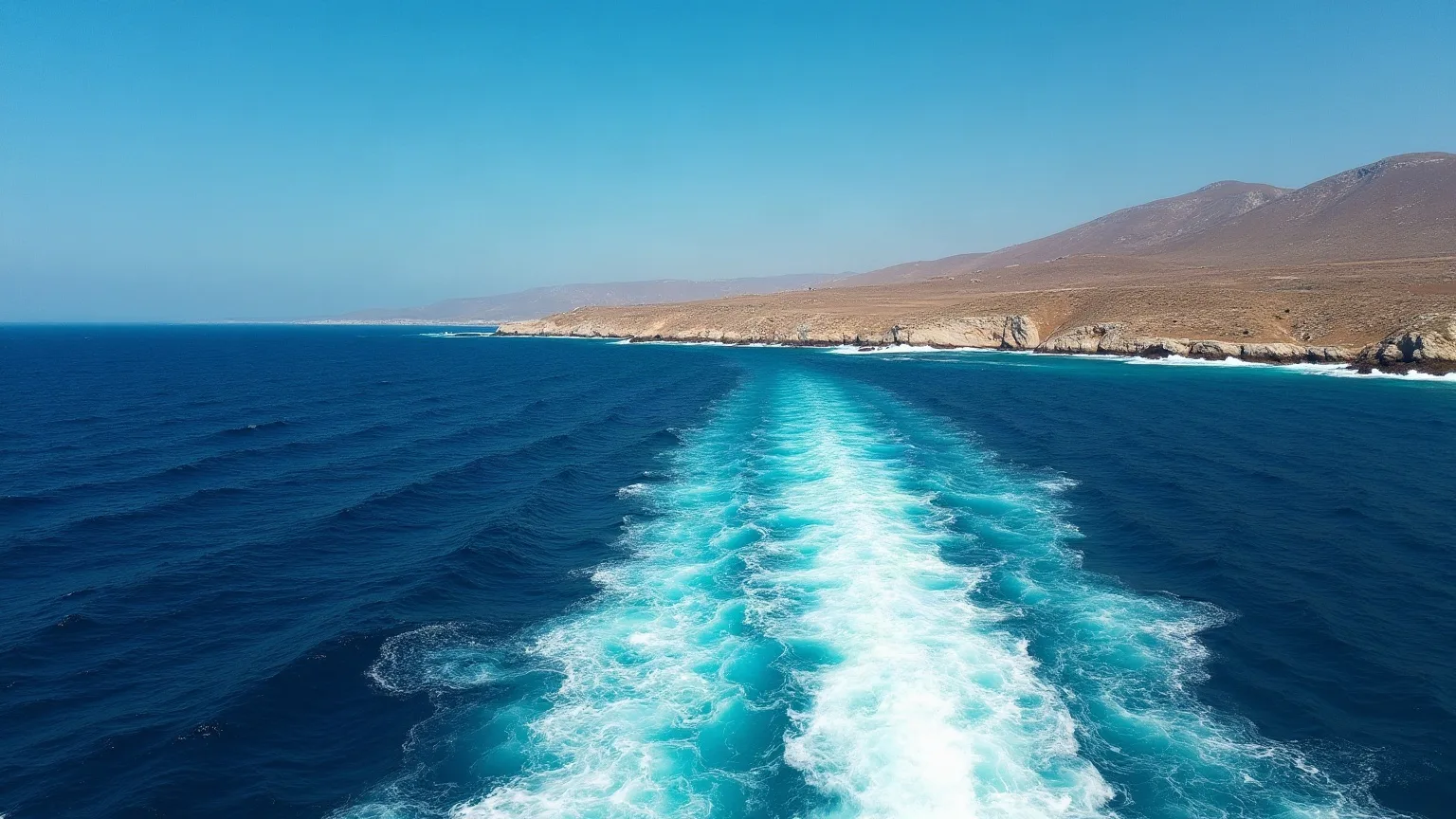
Cyclades sailing in meltemi season comes down to timing. The wind is lightest in the morning and strongest in the early afternoon, so crews who move early, sail the hard legs with the wind behind them and keep a spare day in the plan get the best of it, while crews who fight it spend the week tired.
The meltemi is not a reason to avoid the Cyclades. It is a seasonal pattern that comes back every summer, and once you plan around it, it gives some of the best sailing in Greece.
This guide is about the route rather than the weather map: when the wind blows, what it does to a day, where to hide from it and who it suits. If you are still choosing a sea, start with our destinations and come back to the Cyclades once you know they fit your crew.
What the meltemi is
The meltemi is the local name for the etesian winds, a dry northerly flow that dominates the Aegean through the summer. It is rainless and comes with low humidity, so a windy day in the Cyclades usually means clear skies and hard blue water.
For sailors, the key point is that it is a pattern rather than a storm. It is driven by pressure on a continental scale, it is among the most persistent regional wind systems in the area, and it behaves in ways an experienced crew can plan around. Our guide on what the meltemi is covers the meteorology in more detail.
When it blows
The etesians generally dominate the Aegean from about mid-May to mid-September. Within that season, July and August are the months when the meltemi is at its strongest and most persistent, and intense days become less frequent towards the end of the season.
There is also a daily rhythm, and it matters more to a route than the month does. The wind reaches its maximum in the early afternoon and may die away during the night, so the same stretch of water can feel like two different seas at eight in the morning and at three in the afternoon.
| Time of day | What it usually means for a crew |
|---|---|
| Early morning | The lightest wind of the day, and the time to make the passage |
| Late morning | Building breeze, good sailing, the time to be closing on the next bay |
| Early afternoon | The strongest wind, best spent at anchor or tied up |
| Evening and night | Often easing, though a strong spell can blow through the night |
A strong spell can run for several days in a row. That is the pattern that catches crews out, not a single windy afternoon.
June and September are often the easier months for a first look at the Cyclades. The wind is regular enough for good sailing, and the strongest days come less often than in the middle of the summer.
How it shapes a route
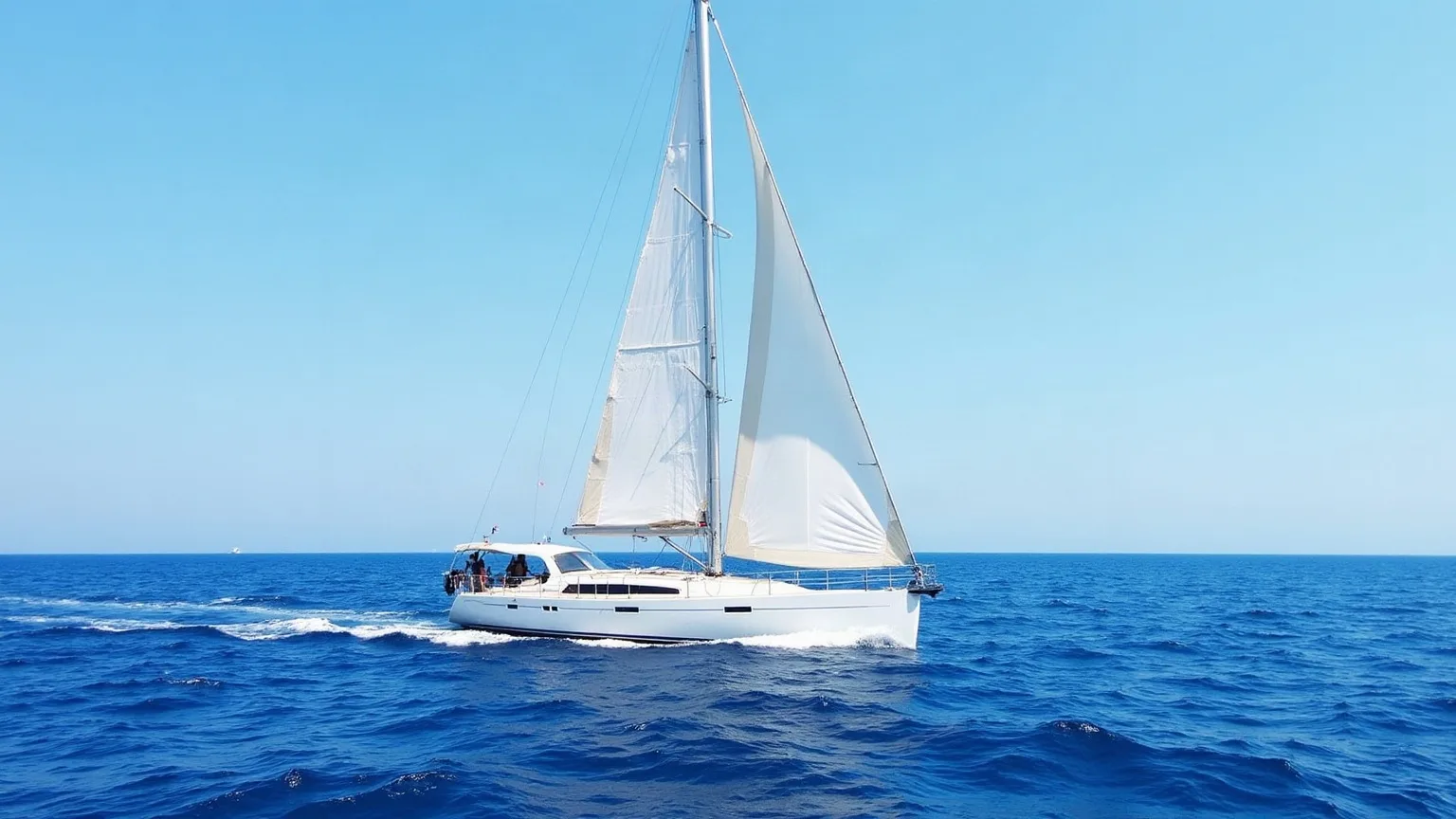
The meltemi turns a Cyclades route into a question of direction and timing. The wind comes from the north, so legs heading south are the easy ones and legs heading north are the hard ones.
Experienced crews use that in three ways. They plan the week so that the longest passages run downwind or across the wind, rather than straight into it. They leave at first light and aim to arrive by lunchtime, before the afternoon peak. And they put the reef in at anchor, not halfway across a channel.
Good wind planning starts with the shape of the whole week. If the base sits at the northern end of the route, the first legs south are the easy ones and the return north is the hard part, so save the return for the early mornings of the last days and keep the spare day near the end of the week, before the last leg home.
The shape of the islands matters as much as the wind. The wind accelerates through the gaps between islands and around headlands, so a channel can be much windier than the open sea on either side of it. A route that looks short on the chart can be the hardest day of the week if it crosses the wrong channel at the wrong time.
That is also why the Cyclades usually hold fewer islands in a week than calmer seas. Our guide to how many islands you can visit in a week shows how the distances and the wind set that limit.
The yacht makes a difference too. A catamaran stays level under sail and at anchor, which changes how a windy week feels below decks. Our comparison of catamaran or monohull covers that choice.
Sheltered anchorages
In meltemi season, an anchorage is chosen for its shelter first and its looks second. With a northerly wind, the bays worth heading for are the ones open to the south and protected by land to the north.
Three things make a good meltemi anchorage. The bay faces away from the wind. The ground behind it is low enough not to send gusts down the slopes, because wind falling off high ground can be stronger in the bay than out at sea. And there is room to swing and to re-anchor if the first attempt does not hold.
Before you drop anchor in a blow
- Check the direction of the bay against the forecast for the whole night, not just the afternoon.
- Look at the hills behind it. Steep, high ground can mean violent gusts on the water below.
- Let out more chain than you would on a calm day, and check the anchor has set.
- Keep a second option within an hour’s sail in case the first bay is full or exposed.
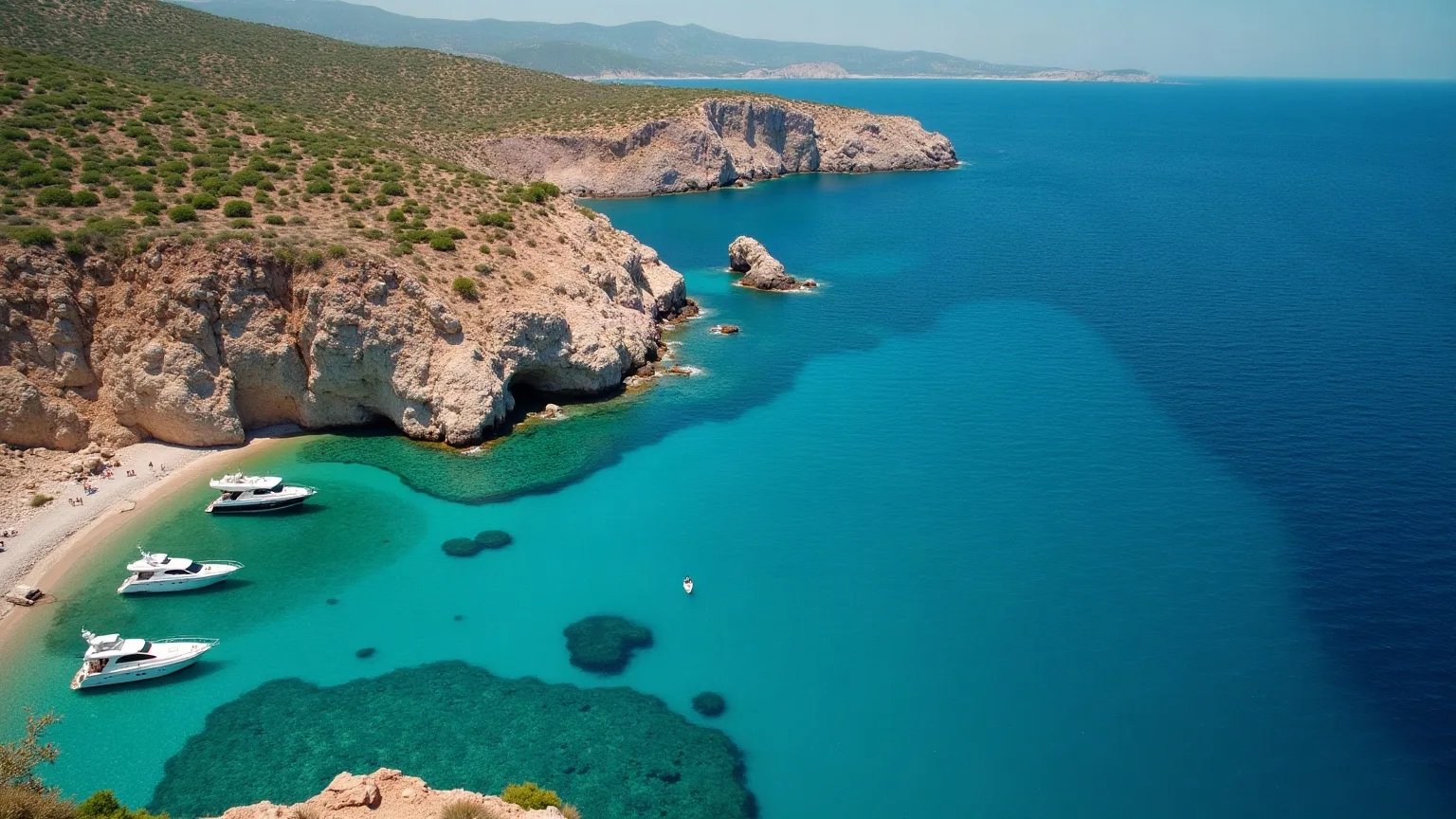
Popular harbours can fill early on windy days, because every crew has the same idea. Arriving by lunchtime is the simplest way to get a good spot.
When to stay put
Sometimes the right move is not to move. If the forecast shows a strong spell building and the next leg runs into it, a day in a safe harbour or a well-sheltered bay is part of the plan, not a failure of it.
Read the forecast the evening before and again in the morning, and look at the afternoon, not the morning, because that is when the wind will be at its strongest. If the leg only works with an early start and the start is already late, wait for the next morning.
A spare day in the week is what makes that decision easy. Without one, every lost day pushes the route and turns the last leg back to base into a race against the wind. With one, a windy day becomes a day for the village, the beach and a long lunch.
It also helps to agree on it at the start. Tell everyone on the first evening that one day may be spent in harbour, and nobody feels short-changed when it happens.
Who should sail here
The Cyclades in high summer suit crews who are comfortable with a strong breeze, a short steep sea and an early alarm. For them, it is some of the best sailing in Greece, and it rewards crews who already know Aegean sailing.
For a first charter, or a group with no one confident at the helm in a blow, there are two good options. One is to sail the Cyclades outside July and August, when the wind is usually lighter. The other is to take a skippered yacht charter in Greece, which puts someone on board who reads the wind and the anchorages for you. Our guide to the best time to sail in Greece compares the months, and the Cyclades yacht charter page is the place to start.
If calm water matters more than famous islands, the honest answer may be a different sea. Our comparison of which Greek islands suit a yacht charter sets the regions side by side.
Frequently Asked Questions
How long do the meltemi winds last in Greece?
The season runs from about mid-May to mid-September, at its strongest in July and August. Within that, a strong spell can blow for several days in a row before it eases, and the wind is usually lightest in the early morning.
Can you sail the Cyclades in August?
Yes, and many crews do. It calls for early starts, legs planned with the wind behind you, sheltered anchorages and a spare day. For a first charter in August, taking a skipper is the most common and the most sensible choice.
How do you plan around the meltemi forecast?
Check the forecast the evening before and again in the morning, and plan the next leg around the afternoon wind rather than the morning calm. If a strong spell is building against your route, stay put and use the spare day.
Sources
- Encyclopaedia Britannica, Etesian wind. https://www.britannica.com/science/etesian-wind
- Dafka, S. et al., The Etesians: from observations to reanalysis, Climate Dynamics, 2016. https://link.springer.com/article/10.1007/s00382-015-2920-7
Tell us where you want to sail, when and how much wind your crew actually wants, and we will come back with the yachts that are available for that sea.
Tell us where you want to sail